


Made with care, made to last
How a Belgian family business produces its counter trays, and why that story matters at your customer's counter.
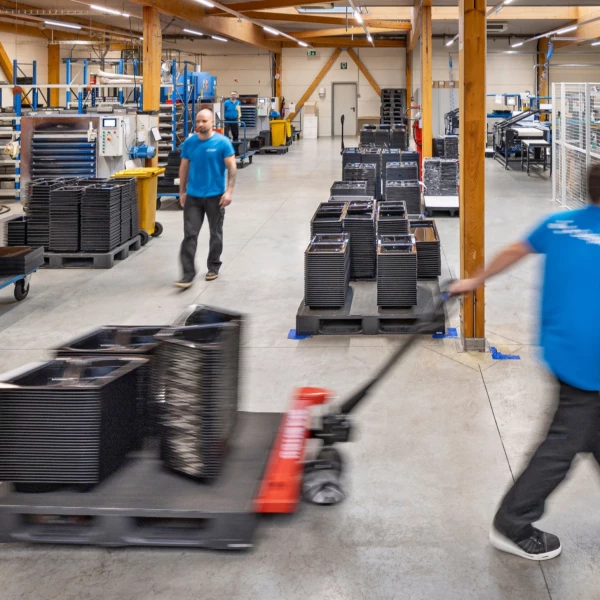
A counter tray works hard. It is filled, emptied, washed and refilled every day, for years. That is why the most sustainable tray is the one that stays in use: well made, easy to clean and good-looking enough that nobody wants to replace it.
That thinking runs through everything at Dupont. It is a family business that has supplied the food sector for more than 35 years, now continued by a new generation. In the company's own words, its values are warmth, accessibility and genuine commitment. Responsible production is where those values become concrete.

How it is made

Designed to be used again and again
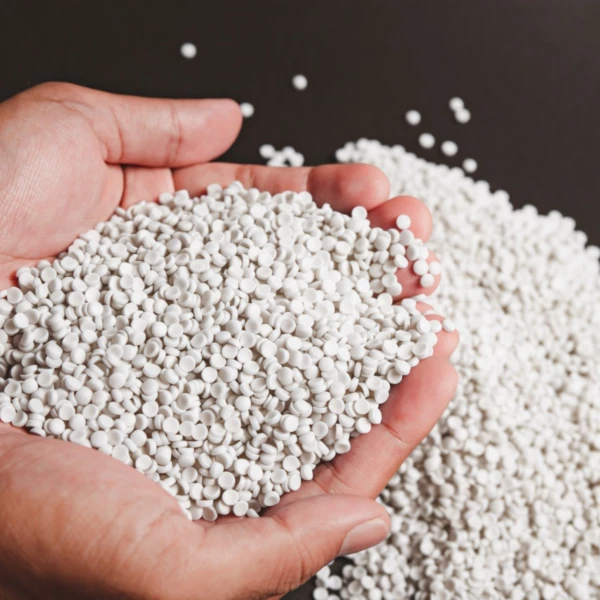
A responsible product starts with a long life. PlexiLine trays are thermoformed from a single sheet of food-safe PMMA (acrylic), so there are no seams where dirt can hide. They are lightweight, stackable, dishwasher safe and colourfast, and they handle temperatures from –20°C to +80°C. They are also free of BPA and PFAS. And when a tray finally does reach the end of its life, it is 100% recycled into new products for other purposes and sectors. That is a deliberate choice: recycled material stays out of food contact, to protect hygiene. That last point is becoming more real every year. Acrylic sheet used to be hard to recycle mechanically. Chemical recycling now offers another route: depolymerisation breaks PMMA back into its original building block, the monomer MMA, so it can be made into new acrylic.
Why it matters at the counter
Shoppers do notice. In a 2025 McKinsey survey of five European countries, consumers named circularity as the sustainability trait they value most in packaging, and every country had a group willing to pay more for it. Another European study found that 80% of consumers pay attention to packaging sustainability at least sometimes when buying groceries.
It helps to be honest about the limits. Those studies are about packaging, not counter equipment. Food safety and freshness still come first, and many people want sustainability without a big price premium. So it is rarely the main reason to choose a counter. But it is a quiet reason to trust a shop: it shows that the people behind the counter think about how things are made and how long they last.
A story your customers can tell
Butchers, bakers and delis are proud of their craft. Trays that are made with the same care fit that story naturally.
Some ways to bring it up in a conversation:
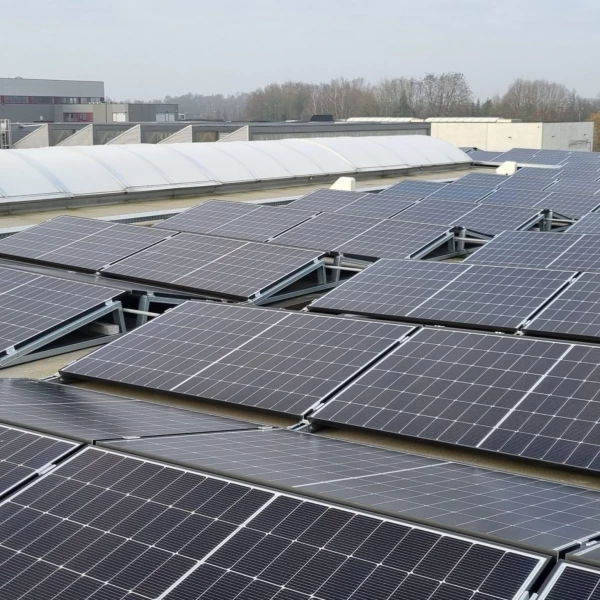
“These trays are made in Europe from European raw materials, on a site powered partly by its own solar panels.”
For customers who like to know where things come from.
“They go straight into the dishwasher and stay looking new, so you will not be replacing them every season.”
For customers who think about running costs and waste.
“No BPA, no PFAS, and fully recyclable at the end of their life.”
For customers who care about what touches their food.
“Plan a few spare trays, so you can swap during cleaning without any gaps in your display.”
A practical tip that also keeps products from being wasted.
Small choices, long life
Sustainability in a shop is rarely one big decision. It is hundreds of small ones: what is on the shelf, how it is made, how long it lasts. A tray that is made with care, used for years and recycled at the end is a small choice that adds up. It is also a story worth telling.
PlexiLine and AluLine are produced by Dupont in Belgium. MelaLine is a collection by Genware, distributed by Dupont, and is not covered by the production claims above.